New patient? Have questions? We’re here to help: (314) 329-4326

The Second Brain: How Nutrition Forms the Bedrock of Emotional Health
Exploring the Gut-Brain Axis, Essential Micronutrients, and Holistic Strategies for True Mental Well-Being
When we think about managing emotional well-being, our minds naturally drift toward classical psychological and psychiatric tools. We think of talk therapy, cognitive behavioral frameworks, mindfulness practices, routine stress management, or prescription medications. While these interventions are undeniably vital components of a modern mental healthcare plan, we frequently overlook the most fundamental, baseline, physical foundation of our mental stability: the fuel we put into our bodies every single day.
The phrase "you are what you eat" is far more than an outdated cliché about physical fitness, caloric intake, or cardiovascular conditioning. Emerging science in the fields of nutritional psychiatry and neurobiology reveals that our daily dietary choices directly dictate our baseline brain chemistry, our resilience to chronic stress, and our overall emotional stability. By deeply understanding the profound, intricate connection between nutrition and emotional health, we can begin to transform our daily meals into intentional, powerful mental health tools.
The Gut-Brain Axis: Where Mood Meets Microbes
For decades, classical Western medicine operated under a siloed framework, treating the brain and the digestive system as completely separate entities. Neurologists focused strictly on the skull, while gastroenterologists focused entirely on the abdomen. Today, that paradigm has been thoroughly shattered. We now know that the brain and the gastrointestinal tract are locked in a continuous, complex, bi-directional conversation known as the gut-brain axis. This sophisticated communication network relies heavily on the vagus nerve (a massive neural highway connecting the brainstem to the visceral organs), the systemic immune system, and specialized biochemical signaling molecules.
Perhaps the most startling revelation of modern nutritional science is that your gut functions structurally and chemically as your "second brain."
Roughly 90% of the body’s serotonin receptors—the chemical messenger responsible for regulating mood, emotional stability, sleep cycles, and pain perception—are located in the lining of the digestive tract, not inside the head.
The production, regulation, and utilization of these vital neurotransmitters depend entirely on two critical pillars: the raw nutritional building blocks we ingest and the health of our gut microbiome (the trillions of diverse bacteria, fungi, and microbes living inside our intestines). When we consume a diet high in ultra-processed foods, refined sugars, chemical emulsifiers, and artificial additives, we inadvertently cultivate a hostile internal environment for beneficial gut bacteria. This microbial imbalance, clinically known as dysbiosis, triggers low-grade, systemic inflammation and disrupts the delicate synthesis of neurotransmitters. The resulting biological fallout is not merely an upset stomach or digestive discomfort; it directly manifests in the central nervous system as heightened generalized anxiety, persistent brain fog, emotional volatility, and depressive episodes.
Nutritional Deficiencies and the Mental Health Epidemic
To truly appreciate how deeply food affects our emotional baseline, we must examine global healthcare data through a nutritional lens. Modern industrial agricultural practices, soil depletion, and the ubiquitous availability of heavily processed Western diets have left a massive portion of the global population structurally overfed but functionally malnourished. We are consuming an abundance of calories, yet our brains are starving for the micronutrients required to synthesize the neurochemicals that keep us feeling grounded, focused, and resilient.
Consider these three sobering statistics that highlight the stark intersections of global mental health burdens and underlying nutritional realities:
- 1 in 8 people worldwide currently live with a diagnosed mental health disorder, making emotional dysregulation and mood disorders one of the leading drivers of global healthcare burdens and disability.
- Over 1 billion individuals globally suffer from vitamin D deficiency or insufficiency, which compromises a critical hormone-like nutrient directly linked to clinical depression, cognitive decline, and Seasonal Affective Disorder (SAD).
- Rigorous clinical research published in nutritional psychiatry databases indicates that individuals who strictly adhere to a traditional, nutrient-dense Mediterranean diet experience a 25% to 35% lower risk of depression compared to those eating a standard processed Western diet high in sugar and trans fats.
When the brain is systematically deprived of essential nutritional building blocks, it lacks the chemical capability to maintain emotional equilibrium. For example, a chronic lack of Omega-3 fatty acids compromises the literal structural integrity of brain cell membranes, making it significantly harder for serotonin and dopamine to bind effectively to their target receptors. Similarly, subclinical deficiencies in essential B-vitamins—such as folate, B6, and B12—effectively halt the methylation pathways and biochemical cycles that convert the amino acids from our food into mood-stabilizing chemicals like melatonin and dopamine.
Key Nutrients for Emotional Resilience
Shifting your dietary habits to support your emotional health does not require subscribing to restrictive, stressful, or hyper-expensive wellness fads. Instead, it centers on an abundant mindset: actively adding dense, bioavailable, whole-food nutrients that protect your nervous system and cool cellular inflammation.
By understanding what the brain needs to thrive, we can build a daily menu designed specifically for emotional resilience.
See chart:
The Sugar Rollercoaster and Cortisol Regulation
To understand how immediate the food-mood connection is, we only need to look at the relationship between refined sugars and our endocrine system. When we consume simple carbohydrates—such as white breads, pastries, sugary coffee drinks, and sodas—they are rapidly broken down into glucose, causing a sharp, unnatural spike in our blood sugar. This is often accompanied by a temporary, artificial burst of dopamine and energy. However, what goes up must inevitably come down.
To handle this massive influx of glucose, the pancreas releases a large dose of insulin, causing blood sugar levels to crash rapidly. When your blood sugar drops below a safe baseline, your brain perceives this sudden crash as an immediate, life-threatening physical emergency. In response, your adrenal glands flood your bloodstream with stress hormones, primarily cortisol and adrenaline, to force the liver to release stored glucose.
This internal hormonal spike mimics the exact physical sensation of a panic attack or a trauma response. Suddenly, you experience a rapid heart rate, sweaty palms, internal restlessness, and intense, unprovoked irritability or anxiety. By trading refined sweets for complex, fiber-rich carbohydrates, you stabilize your blood sugar curves, effectively preventing these artificial, food-induced emotional crises.
Deep Dive: The Micronutrient Connection to Anxiety and Depression
While macronutrients like proteins, fats, and carbohydrates form the broad stroke structure of our diet, it is often the microscopic nutrients—vitamins, minerals, and trace elements—that dictate the fine-tuned adjustments of our daily emotional states. Let us take a closer look at how specific micro-deficiencies alter our psychological landscape.
Magnesium: The Ultimate Neural Chill Pill
Magnesium is a cofactor in over 300 enzymatic reactions within the human body, many of which occur directly within the brain. Specifically, magnesium acts as a natural gatekeeper for NMDA receptors, which are responsible for excitatory neurotransmission. When your body is deficient in magnesium, these receptors can become overstimulated, leading to a state of neural excitability. Culturally, we live in a highly stressed society, and stress causes our bodies to excrete magnesium at an accelerated rate. This creates a vicious cycle: stress depletes magnesium, and low magnesium makes the nervous system highly hyper-reactive to future stress. Incorporating magnesium-rich whole foods helps put a biological brake on an overactive nervous system.
The Role of Amino Acids as Neurotransmitter Precursors
Every single neurotransmitter that influences how you feel right now was constructed from amino acids—the structural components of dietary protein. For example, the amino acid L-tryptophan is the direct precursor required to manufacture serotonin. Without adequate high-quality protein intake paired with complex carbohydrates (which help ferry tryptophan across the blood-brain barrier), your brain simply cannot produce the chemical resources needed to maintain content, peaceful moods. Similarly, the amino acid L-tyrosine is the starting material for dopamine and norepinephrine, which govern your sense of motivation, drive, pleasure, and focus. Ensuring your meals contain high-quality, bioavailable proteins is an essential step in supporting your brain's internal pharmacy.
Building a Sustainable, Mindful Kitchen Strategy
Adopting a mental-health-first approach to food is completely decoupled from the restrictive, perfectionist mindsets often promoted by diet culture. Perfection is not the goal; consistency and cellular nourishment are. You can transition your kitchen into a sanctuary for your mind smoothly by focusing on three realistic, sustainable daily habits:
1. The "Crowding Out" Method
Instead of approaching your diet with a mindset of restriction, subtraction, and deprivation—which inherently spikes stress and cortisol—focus entirely on addition. Commit to eating a handful of fresh spinach, a spoonful of fermented sauerkraut, a serving of raw walnuts, or a cup of antioxidant-rich berries before you reach for your standard processed snacks. By focusing on flooding your body with nutrient-dense options first, you naturally crowd out less helpful, highly processed options without triggering a psychological feeling of restriction.
2. Hydrate for Neuro-Cognitive Stability
The brain is composed of approximately 75% water. Even mild, subclinical dehydration can rapidly compromise cognitive function, disrupt memory, and trigger physical symptoms that mimic and exacerbate generalized anxiety. Drinking clean, filtered water consistently throughout the day keeps cellular metabolic pathways clear, reduces physical and mental fatigue, and prevents the false physical triggers of anxiety—such as a racing pulse or dry mouth—from tricking your brain into a state of panic.
3. Cultivate Mindful Awareness of Post-Prandial Biofeedback
We have been conditioned to count calories, macros, or points, but we rarely tune into our body's immediate energetic feedback. Start keeping a loose, non-judgmental mental or written log of how you feel roughly two hours after completing a meal. If a specific food selection consistently leaves you feeling profoundly sluggish, inexplicably irritable, suddenly anxious, or plagued by brain fog, your gut-brain axis is giving you clear, invaluable biofeedback. It is alerting you that those specific ingredients are causing an inflammatory response or a blood sugar crash that is actively disrupting your internal chemistry.
Integrating Biology and Psychology for Lasting Healing
While optimizing your daily nutritional intake provides the essential physical raw materials for a healthy mind, it is important to acknowledge that emotional healing is rarely a single-track journey. True, sustainable wellness requires an integrative, holistic approach—one that marries physiological lifestyle modifications with expert, trauma-informed psychological and psychiatric support.
Optimizing what you eat can calm a hyper-reactive nervous system, lower biological inflammation, and stabilize systemic hormone fluctuations. However, resolving deep-seated behavioral patterns, processing complex trauma, navigating major life transitions, and learning healthy interpersonal boundaries requires compassionate, professional psychological guidance. When evidence-based talk therapy and expert psychiatric care are paired with physiological foundations like targeted nutrition, your capacity for profound, lasting mental transformation expands exponentially.
If you are ready to stop treating your mental health in fragments and want to address your total well-being holistically, you do not have to navigate this path alone.
Your Resource for Holistic Care: Open Arms Wellness
Open Arms Wellness, with welcoming, state-of-the-art practice locations in Brentwood, MO and Ballwin, MO, offers an integrative, deeply client-centered approach to mental healthcare. Their expert, diverse team of compassionate licensed therapists and psychiatric specialists inherently understands that emotional health is multifaceted, deeply intertwined with both your physical biology and your lived psychological experiences. They provide highly tailored therapy options, comprehensive mental health evaluations, and thoughtful psychiatric medication management designed to meet your unique biological, circumstantial, and psychological needs.
By aligning professional mental health support with lifestyle and somatic awareness, Open Arms Wellness helps you construct a durable foundation for long-term health and emotional vitality.
Take the next step in your healing journey today. Reach out to the team at Open Arms Wellness to schedule an initial appointment or a comprehensive wellness consultation at either their Brentwood or Ballwin locations. Give yourself the comprehensive, unified support your mind, your gut, and your body truly deserve.
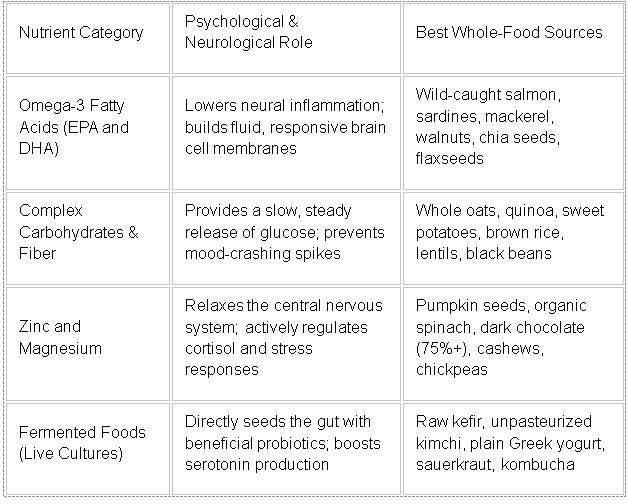
Nutrient Categories